I-40

Open, forward-moving, and full of quiet certainty

The fifth song on Identity is “I-40.” This track gives me a feeling of possibilities. That specific moment when uncertainty starts to lift, and knowing takes its place; knowing that something good can come from all of the difficulty. It’s the shift from hoping things will get better to quietly sensing they can. I wanted the music to capture that growing optimism, forward-moving momentum.

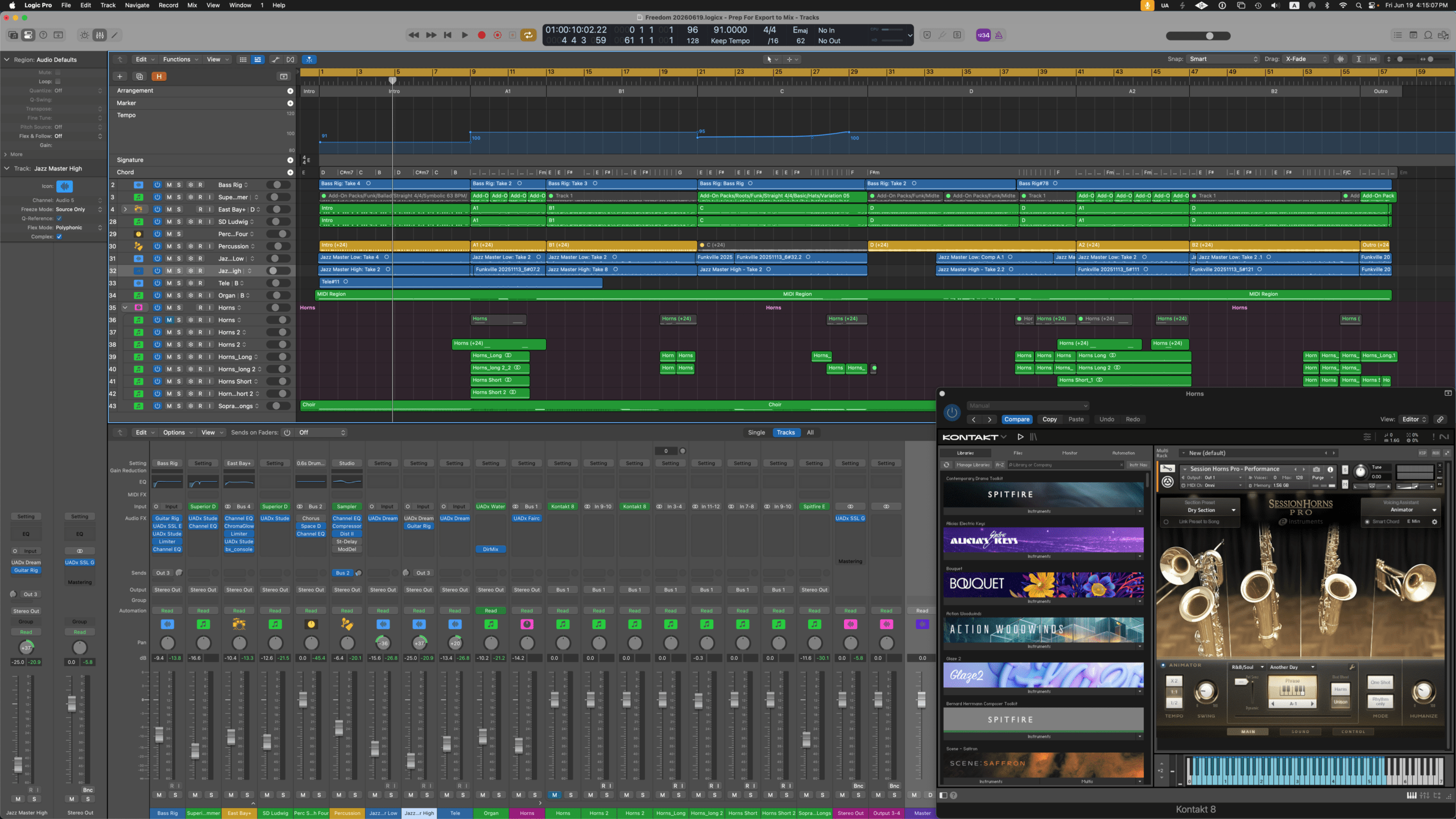
The song came together from voice memos I recorded while experimenting with Open G on my Yamaha acoustic guitar in mid 2025. As it started to take shape, it kept reminding me of that stretch of I-40 between Nashville and Memphis. The song starts out feeling folksy, almost country, and ends up sounding very bluesy and heavy.

“I-40” finds the protagonist in a transformative place on the album’s journey. After the introspection and heavy realizations of earlier tracks, this one is about the quiet thrill of alignment. Things are starting to move in the right direction. The doubts are still there in the periphery, but they’re fading against a growing confidence that better days aren’t just a wish anymore—they’re a destination that will soon be reached. It’s hope graduating into knowing.


Special Recording Notes

  • Tuning: Open G (D–G–D–G–B–D). This was new to me, and I loved how it led me to new ideas for melodies and chord voicings.
  • Guitars (all acoustic):
    • Yamaha – FG730S 
    • Taylor aka “Zeus” (this guitar is godly, hence the name)
    • Baby Taylor in “Nashville tuning”  (high‑strung, octave‑up strings, tuned to Open G) creating a chiming texture that floats above the mix.
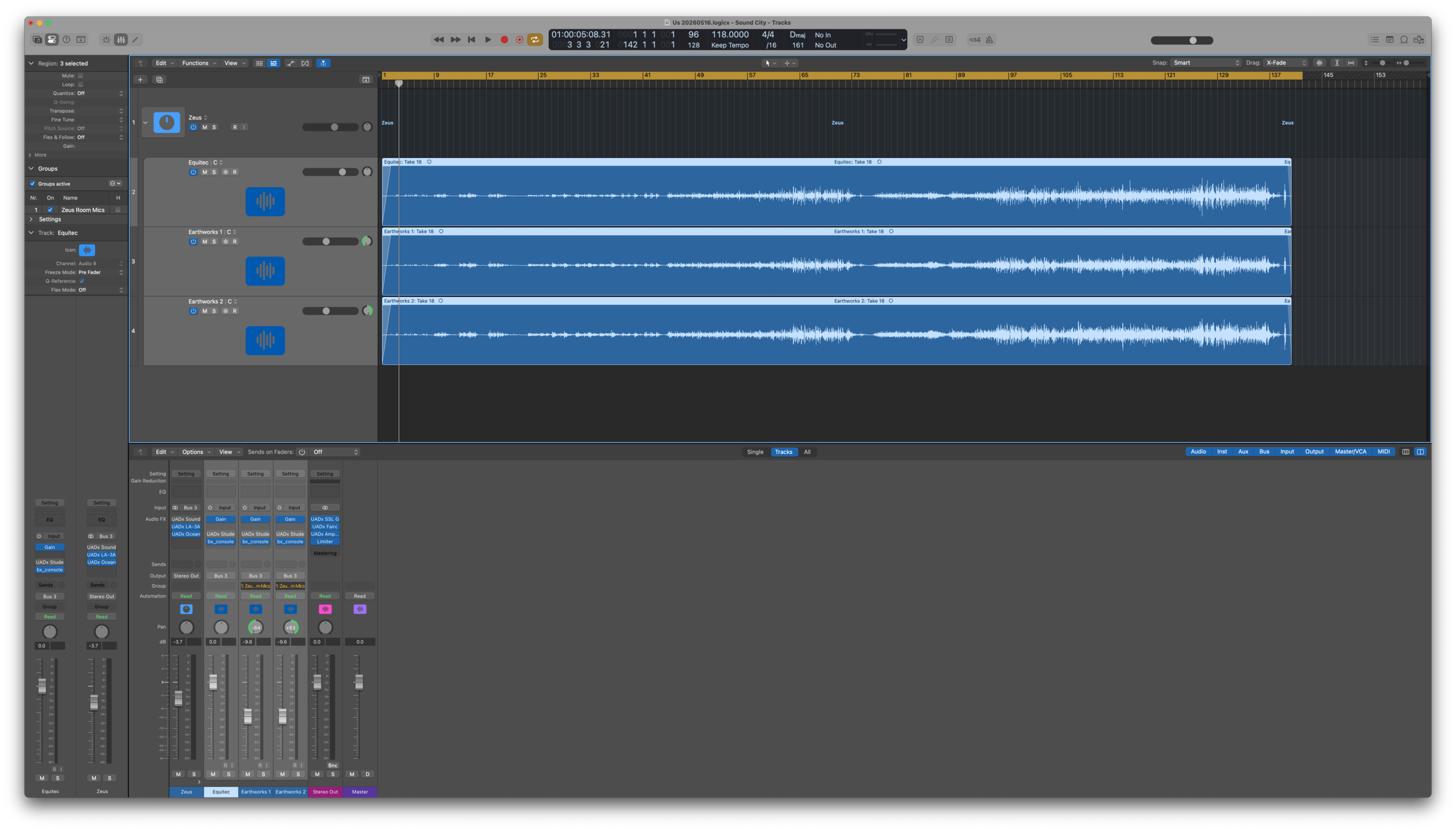
  • Microphone setup: Multi‑mic setup, similar to what I used on “Us,” across all three guitars.
    • Equitec 100 for close mic’ing around the 12th fret. 
    • Matched pair of Earthworks for the room mics, to get depth and breadth.
  • Could have done better: Should have recorded the primary track (the Yamaha) to a click. I love the final version, but it was a lot of work getting everything to lock up and gel. 

Special Mixing Notes

As with “Fields,” I exported everything from Logic as individual audio tracks and brought them into Luna for the final mix. 

Here’s what I used to process each of the tracks:

  • Studer A800 (“Hi-Fi 30IPS GP9 +6 Ext”) 
  • Brainworx SSL 9000J (for tonal and eq treatment) 
  • Fairchild 670 for parallel compression (modified Default setting)
  • LA-3A on each group submaster (“Acoustic Guitar” preset)
  • UA’s Oceanway Studios in reverb mode (modified “Reverb B Guitar” preset) for each group

Here’s what I used on the mix bus:

  • Black Box (“17 Mix Bus 1” preset)
  • SSL G Bus Compressor (modified Default setting)
  • Fairchild 670 (Modified “Stereo Bus” preset)
  • LA-3A (“Mix Bus Comp -1dB GR” preset)
  • ATR-102 (modified “Default” setting)

Special Mastering Notes

  • Target LUFS: -16
  • Ozone settings:
    • Vintage Tape: “Clear Character” preset
    • Equalizer: +0.9 dB @ 12.198 kHz (Shelf, Q 24.0)
    • Imager: 0‑70Hz = 0.0, 70Hz‑3.1kHz = 16.5, 1.5kHz‑11.5kHz = 26.6, 11.5kHz‑20kHz = 36.7
    • Vintage Compressor: “Smooth Opto” preset – threshold -22.6, ratio 1.6:1, attack 28.6ms, release 95.2ms
    • Maximizer: IRC IV “Modern”, threshold -6.5 dB, ceiling -3.5 dB, Character 2.60
  • Dither: POW‑r #2 when converting from 24‑bit to 16‑bit.

Identity is now available on all streaming platforms (such as Spotify), or you can also listen to it on Bandcamp.
Fields

Languid, stretched out, and full of reverb

The fourth song on the Identity album is “Fields”. I wanted it to feel desolate and lonely, yet hopeful and a yearning for connection. I wanted it to be hauntingly beautiful, full of rich tremolo and reverb, with chords that feel like they’re radiating in all directions. I had been listening to Ry Cooder’s Paris, Texas soundtrack, Lyle Lovett, and Jedd Hughes – that lonesome Texas guitar feeling – and I wanted to capture some of that for myself.

The song came together from voice memos I recorded in May 2025. I kept it stretched out and languid, letting the phrases breathe. The working title was “Texas Guitar” for a long time, but eventually it became “Fields” – a name that felt open and wide, like the music itself.

“Fields” extends the emotional journey of the album. The protagonist is looking outward, searching for connection across a vast horizon. The realizations and resulting disappointments of “The Gospel” have left them feeling somewhat lost, but as the song builds, hope of something better begins to return.


Special Recording Notes

  • Guitar: Fender Jazzmaster (“The Duke”).
  • Amps: Fender Tone Master and Fender Hot Rod Deluxe Inspired by Michael Landau.
  • Microphone setup:
    • SM57 close‑mic’ing the Landau amp.
    • Equitec 100 close‑mic’ing the Tone Master.
    • Earthworks stereo pair as room mics.
  • Signal chain: Guitar DI in Logic Pro → Apogee Quartet → Radial JCR ReAmp → UA Max pedal → Radial BigShot ABY pedal → both amplifiers simultaneously.
  • Additional Re‑amping: Recorded DI, then re‑amped through the above setup. Later, I used the re‑amper again to run through a Strymon BigSky for ethereal shimmer processing, which I recorded onto other tracks.
  • Additional instruments: Synth bass for super low subs during dynamic builds.

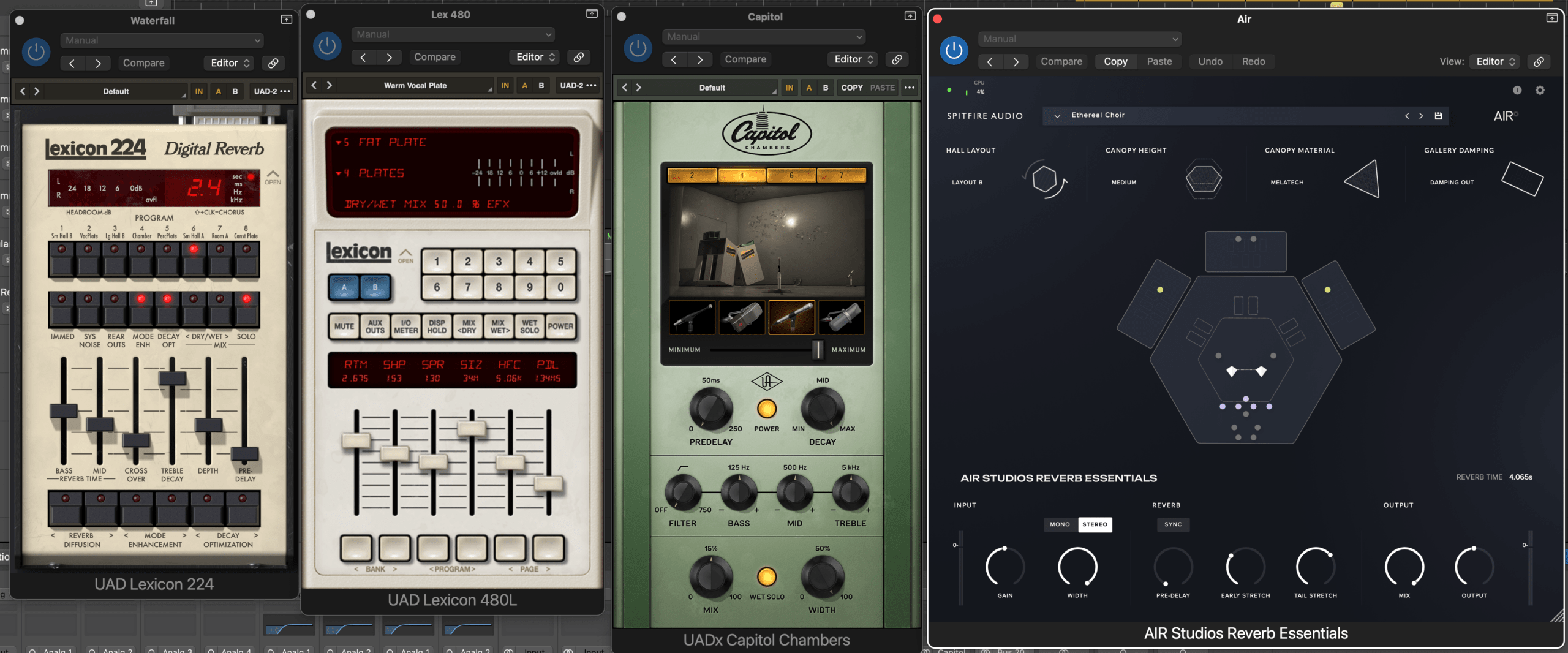
Although “Fields” is essentially a “solo electric guitar” song, it’s a big session for just one guitar. There are five tracks of the same guitar part: one track of DI signal running through UA’s “Dream” amp sim, that DI signal was run back out a re-amp box into a couple of tube amps that were close mic’d and recorded onto dedicated tracks, and then there were two tracks of stereo room mics catching the blend of those amps. Then there is a ton of reverb (Lexicon 224, Lexicon 480, Capitol Chamber, Air Studios Reverb Essentials) and delay (EP-34) helping to give depth and breadth to the sound.

I did another couple of tracks of re-amping my original DI signal. This time I ran it into a BlueSky pedal to get an ethereal wash via the shimmer sound it is so well known for. Here is a clip of just the BlueSky “shimmer” Tracks:

Another texture I added was a wash of delay courtesy of the EP-34. It added a sense of space and motion without taking up too much sonic real estate. Here’s an audio clip of the EP-34 wash:

Here is a “before & after” comparison. The first clip has none of the extra processing in it. Just the original guitar and synth bass tracks. The second has all the additional effects included (multiple reverbs, BlueSky shimmer tracks, EP-34 delay wash).

Before: “Fields No FX Processing.mp3”

After: “Fields All Processing.mp3”


Special Mixing Notes

Normally I don’t use much FX processing from a Logic file in the way of reverbs and delays – I usually start fresh once I get everything into Luna. This time was different – I loved the sounds I got in the rough mix and just exported everything out as individual audio tracks, the instrument tracks as well as the FX sends. This made for a pretty simple and quick mix in Luna once I got levels matched. From there it was mainly a matter of overall volume adjustments and automation, tape settings and saturation levels for each track, and mix bus processing. Here’s what I used on the mix bus:

  • Black Box (“16 Mix Bus 1” preset)
  • SSL G Bus Compressor (modified Default setting)
  • Fairchild 670 (Modified “Stereo Bus” preset)
  • LA-3A (“Mix Bus Comp -1dB GR” preset)
  • ATR-102 (modified “Classic 250 Smooth Master” setting)

Special Mastering Notes

  • Target LUFS: -14.5
  • Ozone settings:
    • Vintage Tape: “Clear Character” preset
    • Equalizer: +0.9 dB @ 13.816 kHz (Shelf, Q 24.0)
    • Imager: 0‑100Hz = 0.0, 100‑1.5kHz = 16.5, 1.5kHz‑11.5kHz = 26.6, 11.5kHz‑20kHz = 36.7
    • Vintage Compressor: “Smooth Opto” preset – threshold -22.6, ratio 1.6:1, attack 28.6ms, release 95.2ms
    • Maximizer: IRC IV “Modern”, threshold -8.3 dB, ceiling -4.8 dB, Character 2.60
  • Dither: POW‑r #2 when converting from 24‑bit to 16‑bit.

Identity is now available on all streaming platforms (such as Spotify), or you can also listen to it on Bandcamp.

The Gospel

Love the music, not the rules

I love the chord voicings and progressions in Gospel music and have been wanting to do a gospel-inspired song for a few years. Aretha Franklin’s “Amazing Grace” is one of the most powerful, uplifting, and spiritually rich pieces of music I have ever experienced. I watched videos on gospel piano and Hammond B3 to get a feeling of what would be involved and set out to write a song about feeling lost and then finding clarity and alignment. As the piece started coming together, something just didn’t feel right. I was getting “all the feels” as I hit the chorus, but also felt deeply wrong at the same time.

I am a big believer in spirituality and finding spiritual connections in the world, but I am not a fan of organized religion – historically, it has done so much more harm than good. So the song’s lyrics had to take a turn to feel honest to me. What started as a song about finding community through faith became a critique of religious rules and worthiness.

The final version is honest, even if it’s not what I originally planned. It’s full of gospel voicings, inversions, and the “Sunday scale” – but the message is mine.

In the arc of the Identity album, “The Gospel” adds more complex instrumentation and color, while extending the sentiment of “Angel” as the protagonist continues their search for connection and understanding, reaching for “something more”.


Special Recording Notes

  • All instruments were recorded in Logic at 24‑bit/96kHz.
  • Lead vocal: No external processing during recording – captured dry to leave flexibility for later.
  • Backing vocals: Mervyn Warren Choir, programmed via MIDI.
  • Bass: Electric bass played live.
  • Guitars: Two electric guitar parts played live.
  • Drums: Superior Drummer Reel Reel – Woodroom Drums. A new library to me – and I love it!
  • Organ: Logic Pro’s “Oakland Organ” and UA’s Waterfall Organ.
  • Piano: Native Instruments Kontakt “The Maverick” (using the “Deep Maverick” preset).
  • All tracks were exported into Luna for mixing.

Special Mix Prep Notes (Post‑Tracking, Pre‑Mixing)

  • Clip gain: Adjusted every vocal region to around -18 dB RMS before any processing.
  • Melodyne: Used for both pitch correction and the sibilant tool – far superior to FlexPitch.
  • Hardware Voxbox: Ran the lead vocal through my Manley Voxbox as a hardware insert. Settings:
    • Input: 12:00, Gain: 48, HPF: 80Hz
    • Compressor: Threshold 2:00, Attack Medium Slow, Release Medium Fast
    • De‑esser: LIMIT 10:1, Threshold 12:00
    • EQ: Low Peak 100Hz +1dB, Mid Dip 300Hz –8dB, Hi Peak 12kHz +8dB

Special Mixing Notes

  • Submasters: Created group submasters for Drums, Bass, Guitars, Piano, Organ, BVs/Choir, and Lead Vocal.
  • API EQ trick: Used on the electric guitars – +1 click of 3k on one guitar, +1 click of 5k on the other (UAD API 550).
  • Drums: Empirical Labs Distressor (modified “Parallel Drum Bus” preset) for parallel compression on the Reel to Reel Drums.
  • Bass: dbx 160 and Pultec EQP‑1A.
  • Lead Vocal: UA SSL 4000E on the channel. Empirical Labs Distressor (“Stronger Vocal Compressor” preset) for parallel compression. Shadow Hills (modified “Vox Male” preset) on the lead vocal submaster.
  • Vocal double: Created via Melodyne, processed with A‑Type (“Feeling That Way” preset).
  • Reverb: Capitol Chambers (modified “Big Vocal Sauce” preset) on a send for lead vocal.
  • Black Box on each group submaster:
    • Drums: “Mix Bus 4 Aggro Rock”
    • Bass: “08 Black Wow”
    • Guitars: “15 Guitar Opener”
    • Piano: “18 Mix Bus 2”
    • Organ: “35 Master‑Rock Anarchy”
    • BVs/Choir: “07 Airy Vocal”
    • Lead Vocal: “05 Acoustic Sparkle”
  • Mix Bus processing: Black Box, SSL G Bus Compressor, Fairchild 670, ATR-102, plus a Pultec EQP‑1A boosting & attenuating 2dB @ 100Hz & 10kHz.

Special Mastering Notes

  • Target LUFS: Aimed for approximately -14 LUFS at the climax.
  • Ozone settings:
    • Vintage Tape: “Clear Character” preset
    • Equalizer: Slight boost of +0.6 dB @ 10.696 kHz (Shelf)
    • Imager: 0‑182Hz = 0.0, 182Hz‑2.4kHz = 11.4, 2.4kHz‑12kHz = 29.1, 12kHz‑20kHz = 32.9
    • Vintage Compressor: “Smooth Opto” preset – threshold -18.6 dB, ratio 1.5:1, attack 28.6ms, release 46.9ms
    • Maximizer: IRC IV “Modern”, threshold -6.3 dB, ceiling -4.0 dB, Character 2.60
  • Dither: POW‑r #2 when converting from 24‑bit to 16‑bit.

Here is the leadsheet to “The Gospel”.

Identity is now available on all streaming platforms (such as Spotify), or you can also listen to it on Bandcamp.

Us

Open D, Zeus, and a song about family

“Us” started with a tuning I had never used before: Open D (DADF#AD). I’ve written songs in alternate tunings previously, but never in Open D. The moment I strummed that first chord on my Taylor “Zeus”, I knew there was a song in there waiting for me to discover. It felt deeply resonant, wide, and somehow nostalgic. The song came together over a few days of songwriting rotations.

The song’s melody and movements reminded me of my family, all the fun and magical moments we have shared over the years. It feels warm and expansive with a sense of adventure to me.

For the album’s narrative, this song builds on the nostalgia of “Angel” – remembering what was good in one’s life and wanting that to last as long as possible.

I rehearsed the song daily and performed it at multiple CST sessions. By the time I was ready to record, I knew the song inside out – but that didn’t make the recording process any easier (see Special Recording Notes).


Special Recording Notes

  • Guitar: Taylor “Zeus”, tuned to Open D (DADF#AD).
  • Microphone setup: Multi‑mic technique – one Equitec mic at the 12th fret, plus two Earthworks microphones in stereo a few feet away and slightly above. This gave me flexibility in mixing to balance string articulation and room tones. I was pleasantly surprised by the depth this approach afforded me.
  • Recording environment: Outside noise (delivery trucks, helicopters, planes) ruined many takes. I learned to record during quiet late‑night hours.
  • Keeper take: Take 18 was the one. It felt solid from start to finish. I marked it immediately.

Special Mix Prep Notes (Post‑Tracking, Pre‑Mixing)

  • After some clip gain adjustments (shooting for -18dB RMS), I exported all the files out of Logic and brought them into Luna for mixing.

Special Mixing Notes

  • Submasters: Created a group sub‑master for the guitar tracks.
  • Brainworx SSL 9000 J: Used on each of the guitar channels for tone shaping.
  • Fairchild 670: Used on a send with modified settings (adjusted Input and Threshold from the default) for parallel compression.
  • LA‑3A: On the group sub‑master using the “Acoustic Guitar” preset. (Got this idea from a Bob Clearmountain video.)
  • Ocean Way Studios: Used in reverb mode on a send.
  • Capitol Chambers: Used with a modified version of the “Acoustic Guitar Chamber 6” preset.
  • Mix Bus processing: Black Box (“17 Mix Bus 1” preset), SSL G Bus Compressor (modified Default setting), Fairchild 670 (Modified Stereo Bus preset), ATR-102 (modified Default setting)

Special Mastering Notes

  • Target LUFS: Aimed for approximately -16 LUFS (preserving the wide dynamic range – very soft to triple forte).
  • Ozone settings:
    • Vintage Tape: “Clean Fifteen” preset
    • Equalizer: -1.2 dB @ 239 Hz (Bell, Q 8.9), +0.6 dB @ 10.7 kHz (Shelf, Q 24.0)
    • Imager: 0‑70Hz = 0.0, 70‑2.7kHz = 24.1, 2.7kHz‑11.8kHz = 32.9, 11.8kHz‑20kHz = 41.8
    • Vintage Compressor: “Smooth Opto” preset – threshold -22.6, ratio 1.5:1, attack 37.8ms, release 69.6ms
    • Maximizer: IRC IV “Modern”, threshold -7.2 dB, ceiling -4.3 dB, Character 2.60
  • Dither: POW‑r #2 when converting from 24‑bit to 16‑bit.

Identity is now available on all streaming platforms (such as Spotify), or you can also listen to it on Bandcamp.
Angel

For the Identity album, I wanted to start small and end huge, with complexity and volume building over time. To do this, I felt the first song had to be elemental and essential. What better way to convey this than with the most fundamental musical instrument: the human voice? That song would become “Angel”.

When I first started sketching the piece out, I sat at my keyboard with a notebook and a pencil. No complicated samples, just my voice and a simple piano sound. I needed to figure out the chords, the melody, and how the verses would shift from minor to major. That piano sketch became the blueprint for everything that followed.

I originally intended to sing all the vocal parts myself – four voices, stacked and blended. I created a lead sheet and rehearsed the main vocal with piano daily. But as my self‑imposed recording deadline approached, I realized that I was running out of time. I had never actually tried singing the other parts, and I wasn’t confident that I could get the blend and consistency I wanted in the time I had left. I needed a better solution.

Then I discovered Mervyn Warren’s Choir library (Spitfire Audio) during a Black Friday sale. That changed everything. Suddenly, I had a real‑sounding ensemble that could support my lead vocal without overpowering it. I ended up using the choir throughout the entire piece, from start to finish – introducing different sections of the choir at key points (bridge, final chorus) but always keeping a choral presence underneath.

Once I had a rough mix together, hearing everything blend together, I knew this was going to work as the opener to the album that I had originally imagined. Mixing and mastering this piece was pretty straightforward as there weren’t too many tracks and everything was sounding really good with some minimal processing.


Special Recording Notes

  • Lead vocal: Recorded in Logic at 24bit/96kHz.
  • No external processing during recording – captured dry to leave flexibility for later.

Special Mix Prep Notes (Post‑Tracking, Pre‑Mixing)

  • Clip gain: Adjusted every vocal region to around -18 dB RMS before any processing.
  • Melodyne: Used for both pitch correction and the sibilant tool – far superior to FlexPitch.
  • Hardware Voxbox: Ran the lead vocal through my Manley Voxbox as a hardware insert. Settings:
    • Input: 1:00, Gain: 48, HPF: 80Hz
    • Compressor: Threshold 12:00, Attack Fast, Release Medium Fast (“Classic LA2A”)
    • De‑esser: LIMIT 10:1, Threshold 9:00
    • EQ: Low Peak 100Hz +2dB, Mid Dip 300Hz –9.75dB, Hi Peak 20kHz +11.5dB

Special Mixing Notes

  • Choir: Mervyn Warren Choir, programmed via MIDI and rendered as audio, placed on its own fader groups. Created submasters for each choir section (e.g., soprano, alto, tenor, bass) and wrote automation to build dynamics across the song’s sections (intro, verse, chorus, bridge, outro).
  • Lead vocal chain: After the hardware insert, I set up two sends: one for parallel compression using a Fairchild 660, and another to a dedicated instance of Black Box using the “Airy Vocal” preset for some “dirt”. I blended both in with the main vocal track.
  • Reverb:
    • Lexicon 480L with the “Dialog 2” setting on one send.
    • Air Studios Reverb Essentials with the “Cathedral Strings” setting on another send, used during the climax.
  • Blackbox: Added to master bus with the “16 Mix Bus 1” preset – gave the whole track a subtle, warm glue.

Special Mastering Notes

  • Target LUFS: Aimed for -15 to -16 LUFS (intimate, natural, breath).
  • Ozone settings:
    • EQ: Made small adjustments – +0.8 dB on high shelf @ 10.5 kHz
    • Imager: Mid‑side mode – 0‑70Hz = 0.0, 70Hz‑2.8kHz = 24.1, 2.8kHz‑5.0kHz = 41.8
    • Maximizer: IRC IV “Modern”, threshold -6.5 dB, ceiling -5.0 dB, Character 2.60
  • Dither: POW‑r #2 when converting from 24‑bit to 16‑bit.

Here’s the lead sheet for Angel:

Identity is now available on all streaming platforms (such as Spotify), or you can also listen to it on Bandcamp.

How Identity Came Together (A Personal Account)

Identity is now streaming everywhere and on Bandcamp. This is how it was made.

While doing an annual year‑end review of 2024 and planning for 2025, I started jotting down ideas on my whiteboard for a new music project – things that might be fun and interesting to try.

My initial brain dump

Some ideas were based on tools I wanted to use and/or get more familiar with (Spitfire Audio’s Fragile String Evolutions, Abbey Road Strings, Abbey Road Percussion, Universal Audio’s Luna and mixing plugins, Tone Master, Superior Drummer, Omnisphere, and Dorico). Others were genres I wanted to explore (Texas guitar, Motown‑ish funk bass, gospel chords & changes, a Nine Inch Nails‑style synth piece, an acoustic piece, a Radiohead‑meets‑Soundgarden song, a guitar texture looping piece, and a long textural orchestral composition).

I started by creating an abstraction of how I imagined the album starting and finishing, with some artist references to draw from.

Initial ideas for the album contour abstraction

I then fleshed out the abstraction to get an even clearer picture of what happened in between.

Filled out the abstraction by defining each piece from start to finish.

The working title was Harvest. I gave myself three months (June 1 to August 31, 2025) to finish it. (Spoiler: that didn’t happen.) For the most part, I stayed true to these abstractions and musical sketches I put together in that first week. 

The album became Identity – nine tracks that start small and elemental (a cappella) and end huge, bombastic, ornate, and broad, with everything in between. To prepare, I listened to and studied artists I’ve long admired: Todd Rundgren’s “Pretending to Care” (for the a cappella piece); Aretha Franklin’s “Amazing Grace” (gospel); Ry Cooder, Jedd Hughes, and Lyle Lovett (that lonesome Texas guitar feeling); Joe Dart’s playing on Vulfpeck’s “Dean Town” and James Jamerson for Motown funk; Robert Fripp’s Frippertronics (guitar looping); Nine Inch Nails’ Tension 2013 tour (Pino Palladino on “Sanctified”) and their collaboration with David Bowie (“I’m Afraid of Americans”) for a hard‑hitting synth piece; Ligeti and Penderecki (aleatoric and textural ideas); and Peter Gabriel’s New Blood Orchestra versions of “Signal to Noise” and “Rhythm of the Heat” (which informed my approach to the orchestral piece).

Again, my initial timeline was more than a little optimistic – “Vantage”, the orchestral piece, took on a life of its own. It grew from the Radiohead‑meets‑Soundgarden rock song into a large symphonic piece with a notated score and full orchestral instrumentation. It had so many challenges: compositionally (many metric modulations & meter changes), technically (maxed out rendering memory in Luna), and emotionally (it seemed to never end). It was a massive undertaking.

I created numerous spreadsheets to handle project planning, tracking, and observations along the way – things to remember next time. They were invaluable in helping me to get my thoughts clarified and progress tracked. Here are some screenshots of a few of them.

Songwriting status spreadsheet

Pre-Production tracker

Chigiana-styled composition planning spreadsheet for the orchestral piece, Vantage

Production tracker for all songs

Mixing and mastering prep tracker


Below is the monthly summary of how the whole thing unfolded – the good, the bad, and the metric modulation.

2025

May – Planning & Listening Parties
I spent the first week just listening and imagining. A cappella, Texas guitar, gospel, looped/texture guitar, funk, acoustic guitar, NIN‑style synth, Radiohead‑meets‑Soundgarden, orchestral – I wanted nine distinct genres that would somehow feel like one album. The working title was Harvest. I felt inspired.

June – Songwriting Drill Downs
Structured writing sessions, daily acoustic rehearsals, and “Cafe Show & Tell” (CST) performances for my wife. The Open D piece (I-40) started to feel real.

July – A Slow Month
I dove into the ThinkSpace BBCSO course as well as an InsideTheScore composing challenge. Little direct album progress, but my skills improved.

August – Intensive Writing & Research
Deep dives into Todd Rundgren, Aretha Franklin, Robert Fripp, Ry Cooder, Jedd Hughes, Lyle Lovett, Joe Dart & Vulfpeck, Robert Fripp, Nine Inch Nails, Radio Head, Sound Garden, Peter Gabriel & New Blood Orchestra, as well as the composers Holst, Ligeti and Penderecki. Daily work on all songs in rotation. By the end of the month, I had most song structures as well as full lyrics for the Gospel and NIN pieces. “Yes!!”

September – Daily Rehearsals & Charts
Wrapped up writing of structures and lyrics. Rehearsed all songs six or seven days a week. Started doing deep‑focus rehearsals: Angel section by section for 50 minutes, Fields and Gospel for 30 each, etc.. Lead sheets in Dorico underway.

October – Charts, CST & Logic Templates
Finished charts for Angel, Gospel, and RadioGarden. Restrung all guitars. Created Logic template files for every song – tempo, meters, markers, chord track. Continued performing at CSTs.

November – Production Begins
Recorded scratch tracks, primary guitar parts, and vocals. Re‑amped Fields through my pedalboard – “sounds amazing!” Also added more Spitfire libraries, UAD plugins, and Superior Drummer SDX to my system.

December – Vantage Takes Over
Everything came to a halt due to metric modulation and orchestration issues for Vantage. Eventually figured it out, after losing a lot of momentum. Then completed notation of Vantage – 2nd verse, chorus, strings, bridge, outro, transition. “Made significant progress – feeling good about the piece again.” 

2026

January – Orchestral Scoring & Logic Transition
Exported Dorico MIDI to Logic. Assigned articulations for every instrument. Fixed tempo errors where “.500” had gone missing. Discovered that Horns 1‑4 share samples (legato nightmare). Used Tim Davies’ approaches for string and woodwind arrangements – spread out arpeggios became a lifesaver.

February – Articulation Hell → Breakthrough
Created SHORTS and LONGS track stacks. Then the workflow adjustment that saved me: Humanisation → Quantisation (40%) → Copy to SHORTS → Re‑assign articulation → Delay offset. Applied to every instrument. The result? “Can’t express how relieved I feel … sounds so much better.” I rendered virtual instruments to audio and never looked back.

March – Vocals, Melodyne & First Luna Mix
Learned Melodyne (YouTube and Groove3). Started mixing in Luna, with “The Gospel” being the first song. Discovered clipping before the second chorus – a poorly edited comp region. But then: hardware Manley Voxbox on lead vocal. Huge difference. My vocal recipe became: clip gain → Melodyne → Voxbox → parallel Distressor → Shadow Hills + Pultec. Blackbox on the master bus – “sounds amazing”.

April – Album‑Wide Mix Prep
Mixed Angel, Fields, X9, Us, I‑40, Freedom, and Disintegration in Luna. Built a repeatable template. Added to my plug‑in cheat sheet: AMS doubling, Cooper Delay (default for widening), Oceanway in reverb mode.

May – Vantage Deep Mix, Mastering & Burnout
DeepSeek helped me generate tables for tape machines, console emulations, summing, reverbs, and delays. Then I created a Mix Processing Bus – all submasters → processing bus → trim bus. This let me keep my tone while hitting -6dB peak for mastering. Vantage went through multiple iterations. I was exhausted. I made a Plan B (only Adaptive Limiter) and a Plan A (full Ozone processing). Plan A sounded better. 

June – Submission & Release
June 1st: Submitted the audio files to CDBaby. June 5‑8: I went back and updated Vantage Dorico score with timpani, bass drum, piatti, tubular bells, tam tams. June 9: CDBaby passed inspection – album appeared on Apple Music, Amazon Music, Spotify and other streaming services. June 11: Set up Bandcamp release. Announced album release on my website.


Things I Want to Remember for Next Time

  • Abstractions for everything! – for albums, songs, lyrics, arrangements, mixes, mastering.
  • Parallel processing – work on all songs in rotation. Prevents getting stuck.
  • Keeping a project log was super helpful. Often I lost track of what I did and/or when I did something and having the log helped to put things in perspective.
  • Whiteboard word dumps – adjectives and emotional arcs before writing lyrics.
  • Modeling after other songs (e.g. Afraid of Americans) was super useful
  • Songwriting Status Table before notation, huge help!
  • Created Chigiana-like spreadsheet to identify everything I might want to do in Vantage. Definitely helped to give clarity.
  • While notating challenging parts, determine rhythms first then add pitches
  • Having a piano reduction for Vantage was key, particularly for the arpeggios in the WWs.
  • Having the Chord Track in Logic was super helpful, even just for reference while playing parts in live.
  • Rehearsals: 1) Extended focus (repeat one section at a time until locked) 2) Going over all songs for a couple of months was huge
  • Remembering Confidence on opening line is everything
  • Performing @ CST (Cafe Show & Tell) – weekly creative sharing. Uncovered every blind spot.
  • Re-Amping with two amps rules (Tone Master + Landau = Amazing)
  • Stereo pair mic’ing for room tones worked beautifully (watch for positioning and phase coherence)
  • Tim Davies approaches – string & woodwind arrangements, spread out arpeggios.
  • Shorts/Longs + delay offset – essential for realistic sample orchestras.
  • Remember to keep original MIDI tracks with Virtual Instruments removed after bouncing to audio. Hide, but keep them around.
  • Clip gain to -18dB RMS on all audio tracks.
  • Melodyne – superior to FlexPitch. Sibilant tool is a lifesaver.
  • Hardware Voxbox – massively better than software. Use it.
  • Parallel compression on acoustic guitar is awesome! Loved the Fairchild 770 on Us (Time Constant set to 5, cranked the input gain and the threshold so that -10dB of compression was applied.
  • Using different Studer A800 machines and tape formulations/setting per instrumentation group made a huge difference to create space EQ wise. See project log for specific settings.
  • DeepSeek was invaluable in figuring out which tape machines, tape, & settings to use in Vantage (orchestra & rock instrumentation). Also gave really helpful guidance in delays and reverbs to use on all instruments other than the vocals (see project log for specific settings). Really great.
  • Blackbox HG-2: “Mix bus 1” preset is pretty excellent on just about anything
  • Other plug-in mentions: AMS vocal doubling, Cooper Delay (default) for widening and giving presence particularly synth bass, and Oceanway in reverb mode on a send
  • Mix Processing Bus – submasters → processing bus → trim bus to -6dB. Decouples tone from delivery level.
  • Plan A / Plan B – always have a safety net. Saved me multiple times.
  • 96kHz workflow – record/mix at 96kHz, then convert: 24/96 → 24/44.1 → 16/44.1 with POW‑r #2 dithering.
  • The making/creating is the prize/goal. I’ll never be this intimate with these songs again.

What to Avoid (or Do Better)

  • Never skip the metronome during rehearsals – even if not recording to click. My timing suffered.
  • AI isn’t always great at doing musical analysis and often makes mistakes on advanced usage of music and audio apps.
  • Need a way to circle back to/review original intentions – e.g., The Gospel drifted from its original meaning. A one‑page abstraction for the lyrics might have caught it.
  • Create a tempo track before layered recording – I‑40 drifted because I had no click.
  • Need to remember to voice lead better when writing on guitar and transferring to other instruments
  • Practice in the recording setup – outside noise and unfamiliar mic position ruined takes.
  • Hit a roadblock w/ orchestrating Vantage. I think I was making it too important.
  • Don’t let burnout drive decisions – when exhausted, make a Plan B, rest, then do Plan A properly.

Identity is now available on all streaming platforms (such as Spotify), or you can also listen to it on Bandcamp.

Identity – New Album

At the end of 2024, I wrote a list on my whiteboard of things I thought might be fun to do as a new project. Some ideas were based on the tools I wanted to use while others were focused on the types of songs or genres that I thought would be interesting to research and model after. The working title of the project was Harvest and I gave myself June 1 to August 31, 2025 to finish it.

That timeline was more than a little optimistic. “Vantage”, the finale orchestral piece, took on a life of its own in terms of scope and detail as it transitioned from being a straight ahead rock song into a large symphonic composition with a notated score and full orchestral instrumentation. It was one of the most challenging pieces that I have worked on compositionally, technically, and emotionally. It was a massive undertaking in and of itself.

The album became Identity – nine tracks that start small and elemental, and end huge, bombastic, ornate, and broad, with everything in between. To prepare for this, I listened to and studied artists that I have long admired and whose music I loved.

The theme of the album is about one person’s journey to finding connection and making peace – not with what mankind has made, but with their own thoughts and perceptions.

I wrote, rehearsed, notated, recorded, mixed, and mastered everything in my home studio between May 2025 and June 2026. It was a very full and rewarding period. You can read more about the making of this album on How Identity Came Together (A Personal Account).

Identity is now available on all streaming platforms (such as Spotify), or you can also listen to it here on Bandcamp.