
Radiohead meets Soundgarden, and the song that almost never was
From the outset, I knew that I wanted the Identity album to end with an orchestral piece. But aside from doing abstractions and gathering reference materials, I was actively avoiding working on it. In my mind, it felt way bigger than the rest of the album combined – the scope, the orchestration, the sheer weight of it. It was the one piece I left out of my songwriting rotations because I just didn’t have a clear idea of what it would be. As the months passed, it became a problem that grew larger with every day.
During the songwriting sessions in August 2025, I wrote a complete Radiohead‑meets‑Soundgarden rock song with a full structure of melodies, chords, and lyrics. For a working title, I called it “RadioGarden”.
By December 2025, I had finished production on all of the songs for the album aside from RadioGarden and whatever the orchestral piece would be. I knew from my compositional studies at Berklee and Chigiana that just about any idea can be reimagined for orchestra, so I started asking myself: “What if this rock song was played by an orchestra?” That question changed everything.
“RadioGarden” grew beyond its rock origins. It became a large symphonic piece with a fully notated score and full orchestral instrumentation. It became the album’s finale (now named “Vantage”), and the most difficult piece I’ve worked on in a long time.
When I finally started orchestrating, Tim Davies’ approach – particularly spreading out arpeggios across woodwinds and strings – was the key that unlocked the arrangement. His approach gave me a framework to create movement and interest, rather than simply sustaining chords under the melodies.
Before and after applying ideas from Tim Davies on the first verse:

Before and after applying ideas from Tim Davies on the second verse:

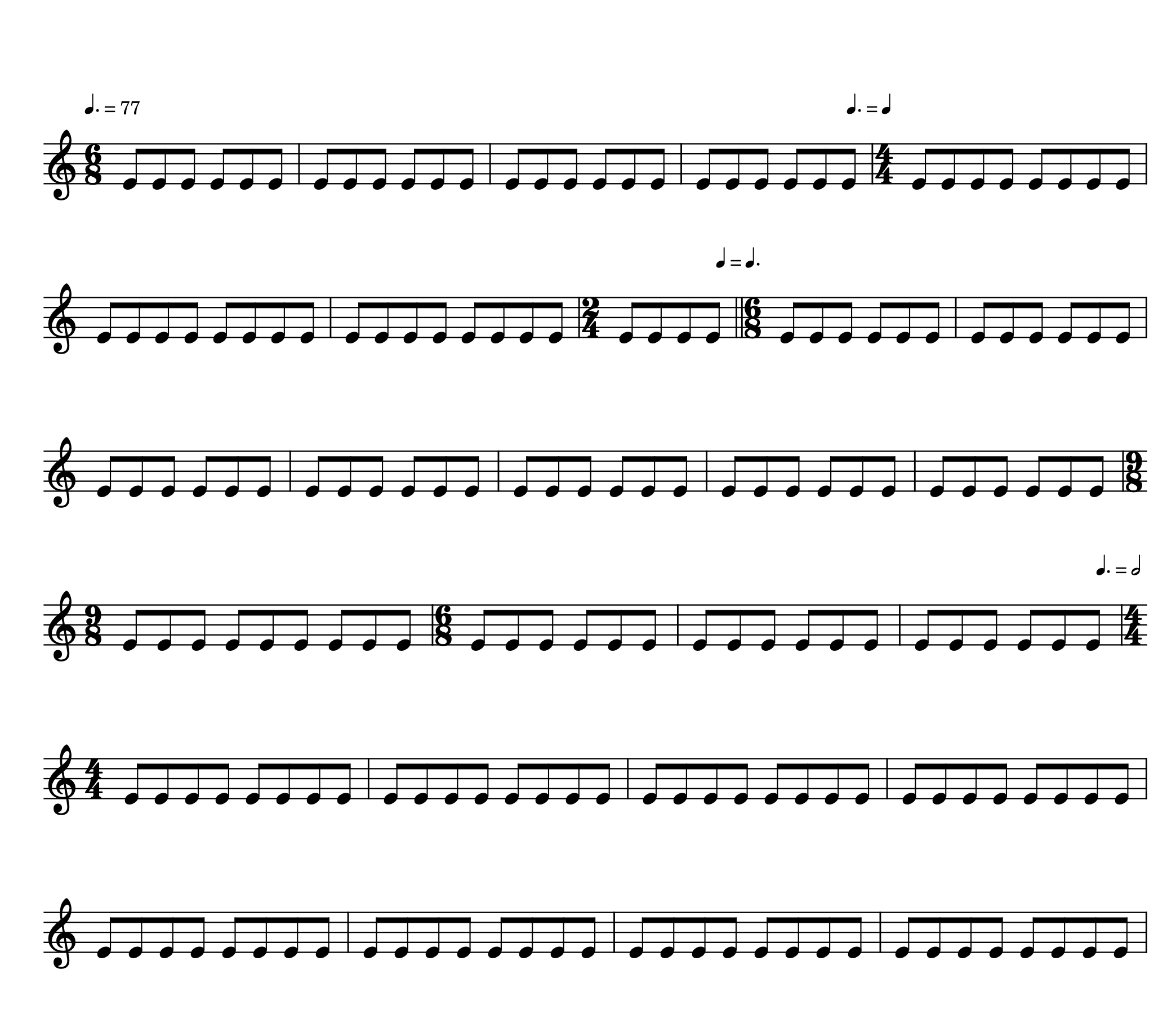
The song was full of challenges: metric modulations, meter changes, sample articulation hell, and technical issues that pushed me and my computer to our limits. There were moments when I thought I would just give up and let it go for the Identity release.
Worksheet I put together to figure out the metric modulation.
My editor at work.

Once the notated score and the orchestral production in Logic were in place, I was so burnt out that I almost called it done. I was beyond ready to move on to post-production (mixing & mastering). But my original vision was that this piece would be the climax, the biggest moment of the entire album. I wanted it to be massive. So I decided to treat the middle section as an experiment, adding rock instrumentation just to see what happened. After putting together some initial ideas, I realized it sounded even better with the power of the drum set, electric guitars, and electric bass giving it depth and breadth. I pushed through and added parts to the middle chorus, bridge, and outro sections. I’m really glad that I did – it elevated the entire piece.
It became the emotional and musical climax of the album – the moment when the protagonist finally finds clarity and resolution. Kind of like me with this song.
Special Recording Notes
- Orchestral parts: Notated in Dorico, exported as MIDI, brought into Logic.
- Orchestral libraries: Spitfire BBCSO and ARO.
- Rock band parts: Electric guitar, bass, drums (Superior Drummer).
- Recorded in Logic at 24‑bit/96kHz.
- Recording environment: A huge Logic session in terms of track count and memory footprint. Final file size was ~29GB with 147 tracks. Each orchestral instrument was three tracks blended together: one exported from Dorico/Note Performer, and the other two being long and short articulations of Spitfire Audio’s Abbey Road Orchestra or BBC SO libraries.
- Keeper take: The acoustic guitar and lead vocal guide track were recorded with one mic, just to hear if the other parts were working. As the project wore on, I found that I liked the scratch track and used Logic’s stem splitter to get each part on individual tracks.
The Logic file for Vantage after rendering all virtual instruments as audio files.


Special Mix Prep Notes
- Clip gain: Adjusted every vocal region to around -18 dB RMS before any processing.
- Melodyne: Used for both pitch correction and the sibilant tool.
- Hardware Voxbox: Ran the lead vocal through my Manley Voxbox as a hardware insert.
- Rendered all virtual tracks as audio for export to Luna.
- SHORTS/LONGS workflow: Essential for realistic sample‑based orchestras.
Special Mixing Notes
- Processing: Used DeepSeek tables for tape, console, summing, reverb, and delay (huge help!). Maxed out Luna’s rendering engine due to track count and processing (this had never happened to me in Luna before).
- Mix Processing Bus: All submasters → processing bus → trim bus – decouples tone from delivery level.
- Mix Bus processing: Black Box (“17 Mix Bus 1” preset), SSL G Bus Compressor (modified Default setting), Fairchild 670 (Modified “Stereo Bus” preset), ATR‑102 (“Classic 250 Smooth Master” setting), Pultec EQP-1A (modified Default setting).
Massive mix in Luna, need four screenshots to get all the tracks in view

Special Mastering Notes
- Target LUFS: -10 LUFS @ peak
- Ozone settings:
- Vintage Tape: “Clear Character” preset
- Equalizer: Slight boost of +0.8 dB @ 11.227 kHz (Shelf)
- Imager: 0‑100Hz = 0.0, 100Hz‑4kHz = 20.3, 4kHz‑12kHz = 30.0, 12kHz‑20kHz = 43
- Vintage Compressor: “Smooth Opto” preset – threshold -19.9 dB, ratio 1.5:1, attack 32.7ms, release 50.4ms
- Maximizer: IRC IV “Modern”, threshold -5.4 dB, ceiling -1.1 dB, Character 2.60
- Dither: POW‑r #2 when converting from 24‑bit to 16‑bit.
- 📄 Here is the full score to Vantage.
Identity is now available on all streaming platforms (such as Spotify), or you can also listen to it on Bandcamp.